
ADA compliance for assisted living signage isn't a box to check. It's a legal mandate that directly shapes resident safety, independence, and a facility's liability exposure. This guide covers the compliance requirements, the sign types every facility needs, design tips that go beyond the minimum, and how to pick a manufacturing partner you can trust.
Key Takeaways
- ADA signage in assisted living facilities requires precise mounting heights, tactile characters, and Grade 2 Braille
- Non-compliant signage creates real legal exposure, documented in multiple DOJ settlements
- A complete signage system spans room IDs, wayfinding, safety, and administrative signs
- Design choices beyond ADA minimums improve usability for residents with vision or cognitive decline
- Choosing a reliable signage manufacturer reduces compliance risk on every order
Why ADA Compliance Matters in Assisted Living Facilities
Assisted living communities frequently include areas of public accommodation, such as dining rooms, activity spaces, and administrative offices, alongside private resident quarters. Wherever those public-facing spaces exist, ADA signage requirements apply.
This matters more in senior care than almost anywhere else. Residents often live with vision loss, cognitive decline, or mobility limitations that make clear, consistent, tactile wayfinding essential, not optional.
The Department of Justice's Title III enforcement record shows what happens when facilities skip this. In its 2008 settlement with Chatham University, DOJ found missing directional signage and an absence of raised, Braille, and floor-designation signs. The remedy required a full signage overhaul.
Similar findings appear in DOJ settlements with the City of Hudson and City of Quincy, where toilet-room signs lacked raised letters and Braille, or sat in the wrong location entirely.
For assisted living operators, the risks are concrete:
- Fines and legal settlements tied to Title III violations
- Failed state health inspections, which often cross-reference ADA-adjacent signage standards
- Loss of resident independence, forcing more reliance on staff for basic navigation
Proper signage isn't just about avoiding penalties. It gives residents the dignity of finding their own way.
Core ADA Compliance Requirements for Assisted Living Signs
The 2010 ADA Standards for Accessible Design lay out exact technical specifications. Getting these details right the first time saves facilities from costly retrofits.
Mounting Height and Placement
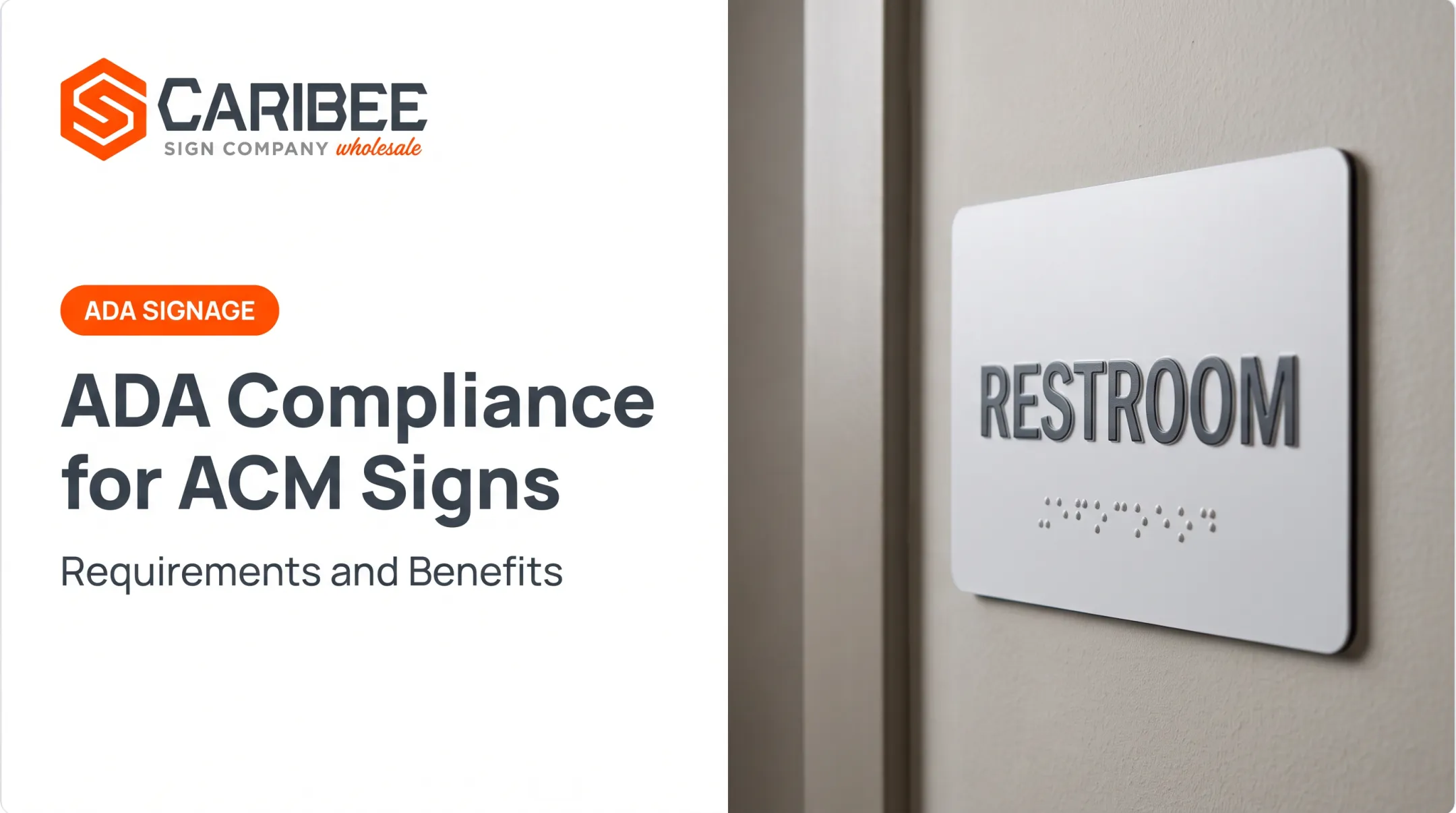
Tactile characters on permanent room signs must have their lowest baseline 48 inches minimum and highest baseline 60 inches maximum above the finished floor.
For door placement:
- Mount signs on the latch side of the door
- Provide 18 by 18 inches of clear floor space centered on the tactile characters
- Position signs so they're not obstructed by the door swing between closed and 45 degrees open
Tactile Characters and Braille
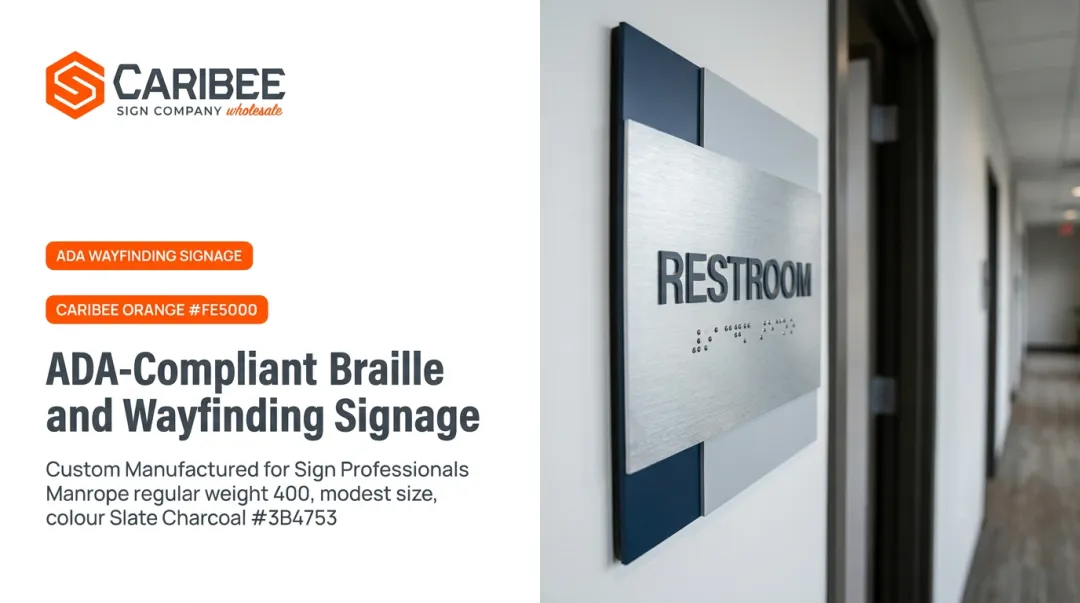
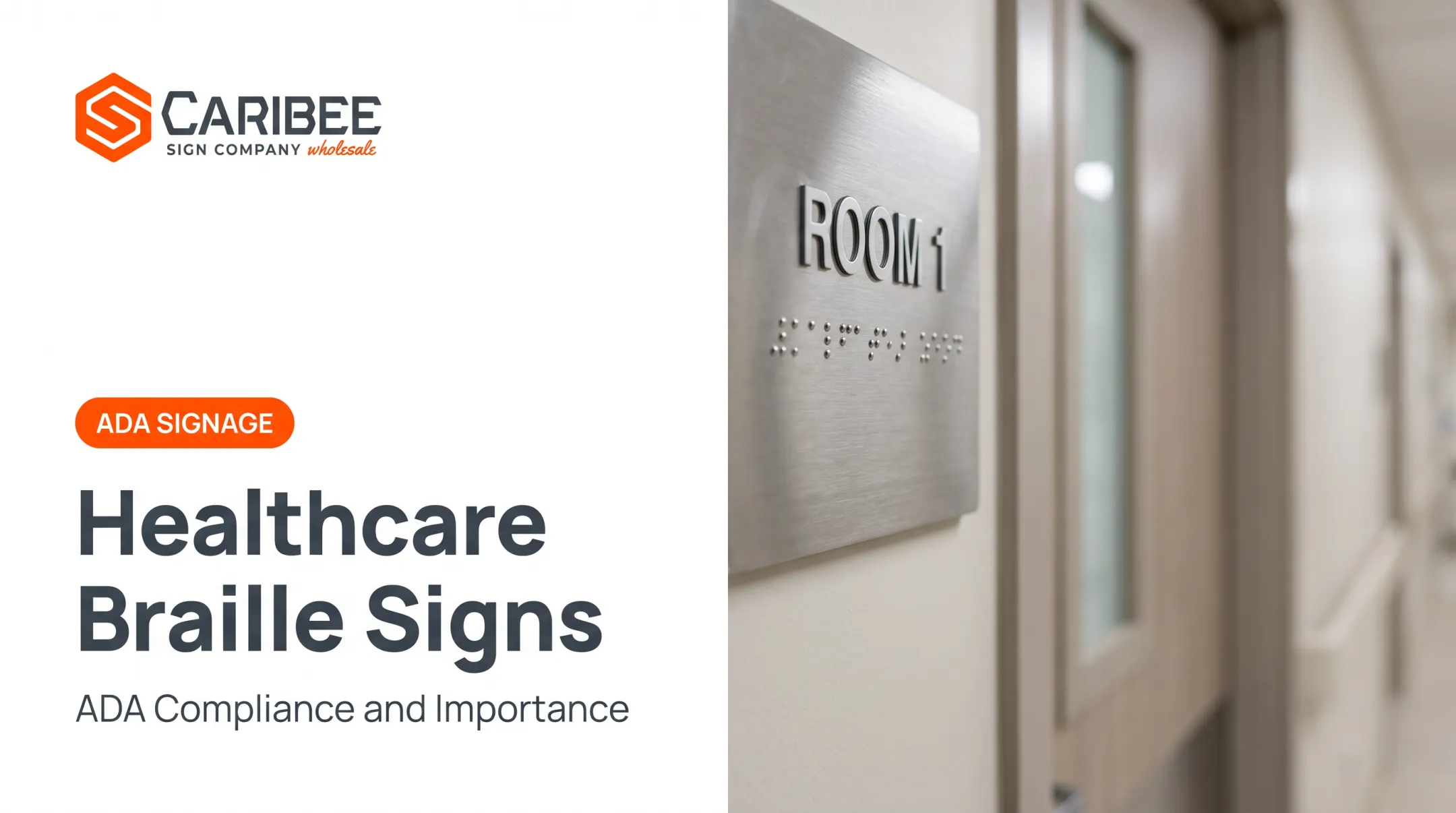
Raised characters must project at least 1/32 inch above the sign's background. That figure is projection depth, not character height. Tactile letter height ranges from 5/8 inch to 2 inches, always uppercase and paired with Grade 2 (contracted) Braille below the text.

Key Braille dimensions:
- Dot diameter: 0.059-0.063 inch
- Dot spacing within a cell: 0.090-0.100 inch
- Clearance from other tactile elements or borders: at least 3/8 inch
Visual Contrast and Finish
Characters and backgrounds need a non-glare finish with strong contrast, either light-on-dark or dark-on-light. That contrast keeps signs readable for residents with low vision.
Pictograms and Symbols
Pictogram fields must be at least 6 inches high, with text and Braille placed outside the field rather than layered inside it. The International Symbol of Accessibility is required for toilet-room identification unless every restroom in the facility is already accessible.
Essential ADA Signs Every Assisted Living Facility Needs
A complete signage system covers four categories: room identification, wayfinding, safety/regulatory, and administrative signage.
Room identification signs should cover:
- Dining rooms and activity rooms
- Therapy and treatment rooms
- Medication rooms
- Resident rooms and staff offices
- Restrooms with proper ISA placement
Wayfinding signs get people from the lot to the right door without backtracking:
- Accessible parking and entrance markers with the ISA symbol
- Directional signs from any inaccessible entrance to the accessible route
- Interior corridor and elevator directions to dining, therapy, and common areas
That exterior gap—missing the path from an inaccessible entrance to the accessible one—is exactly what DOJ flagged in its settlement with Longacre Holdings.
Safety and regulatory signs cover egress and emergency response:
- Exit signs meeting NFPA 101 illumination and visibility standards
- Fire safety and evacuation instructions
- Area-of-refuge and emergency communication signs where required
Administrative signs handle day-to-day operations:
- Visiting hours and facility policy notices
- Staff-only and restricted-area markers
- Reception, nurse station, and office directories
Consistency matters across every category. When fonts, colors, and materials stay uniform facility-wide, residents build a mental map faster and rely less on trial and error.
Memory-care areas need extra cues. Pictograms for dining, restrooms, and activity rooms, plus consistent color coding, help residents navigate when text alone isn’t enough.

Design Best Practices That Go Beyond Minimum Compliance
Meeting the ADA minimum is only the starting point. A 2017 peer-reviewed study on low-vision signage found that legibility depends on the interaction of contrast, illumination, character size, and stroke width. The ADA's contrast values have limited empirical backing on their own.
High-gloss finishes, in particular, can create glare that obscures the message entirely.
For senior living, this translates into practical upgrades:
- Use sans-serif fonts at larger-than-minimum sizes for aging eyes
- Choose matte, non-glare materials like acrylic or metal finishes that also hold up to healthcare-grade disinfecting routines
- Layer in wood-grain finishes where appropriate, keeping a residential feel without sacrificing compliance
Caribee Sign produces ADA signage in acrylic, brushed stainless steel, and wood-grain substrates using in-house CNC routing and laser engraving, giving sign companies flexibility to match a facility's aesthetic while holding to spec.

Common ADA Signage Mistakes Assisted Living Facilities Make
Even well-intentioned facilities stumble on the same few issues repeatedly.
- Inconsistent design across the building. Mixing fonts, colors, or mounting heights between wings confuses residents and raises red flags during inspections.
- Decorative fonts or weak contrast. Script or condensed fonts violate ADA character requirements outright, and low-contrast color pairings undermine readability for low-vision residents.
- Treating handwritten or printed paper signs as permanent. Taped-up notices might solve a problem today, but they fail compliance standards and signal a lack of professionalism during state surveys.
Any of these can turn a routine inspection into a documented violation.
Choosing the Right ADA Signage Partner for Your Facility or Clients
Sign companies managing assisted living projects need a manufacturing partner that gets compliance right on the first order, every time. A single mis-measured tactile sign can mean a failed inspection and a costly reorder.
Caribee Sign specializes in ADA-compliant signage, producing room identification, wayfinding, and safety signs in-house using CNC routing, precision engraving, and laser engraving. Braille translation is handled in-house, so partners don't need to source or verify Grade 2 Braille copy themselves.

What matters most for ongoing facility work:
- Consistent quality control across repeat orders for multi-building campuses
- Fast quote response, typically within one business day
- Technical guidance on mounting height, contrast, and material selection during design
As Hugh Welch of Hugh-Carolina Sign Co. puts it, Caribee is his "go-to" company for ADA signage, citing responsive communication and reliable quality. For shops juggling multiple assisted living clients, that kind of dependability matters as much as the technical spec sheet.
Frequently Asked Questions
What is the required mounting height for ADA signs in assisted living facilities?
Tactile characters must have their lowest baseline at 48 inches and highest baseline at 60 inches above the finished floor. There's no single federally mandated centerline, so verify your project's specific baseline measurements.
Do all rooms in an assisted living facility need Braille signage?
Permanent room designation signs, like resident rooms, dining rooms, and offices, require raised tactile characters and Grade 2 Braille. Temporary or directional signs follow different rules and don't always need Braille.
What happens if an assisted living facility isn't ADA compliant?
Facilities risk DOJ enforcement action, financial settlements, and failed state health inspections. Non-compliance also increases reliance on staff, undermining resident independence.
How can signage help residents with dementia or memory loss?
Consistent symbols, color coding, and simplified wording help residents with cognitive decline navigate without relying solely on text. Predictable design across the facility reinforces this over time.
What materials are best for ADA signs in senior living environments?
Acrylic, brushed metal, and wood-grain finishes all hold up well under healthcare-grade cleaning while maintaining a non-glare, high-contrast surface. Material choice depends on the facility's aesthetic and cleaning protocols.
How often should assisted living facilities update or replace their signage?
Inspect signage periodically for damage, fading, or loose mounting, and replace immediately when found. Review the entire system during any renovation or rebranding to keep design consistent facility-wide.