
The university caught the issue, but only after a student flagged it publicly. That's the core problem with campus braille signage: it's easy to get wrong without noticing, because most sighted staff never test signs the way the people who rely on them actually do.
Universities are dense, high-traffic environments spread across dozens of buildings, each with classrooms, dorms, labs, and shared spaces. ADA-compliant tactile signage isn't a nice-to-have here. It's a legal requirement and a daily necessity for students, faculty, and visitors who are blind or low-vision.
This guide covers what braille signage actually is, what ADA requires, where it's mandatory on campus, the mistakes that keep tripping up universities, and how to source signage that holds up across large rollouts.
Key Takeaways
- Braille signage must be tactile (raised), not printed, to meet ADA Section 216.2
- Campuses need compliant signage at permanent rooms, restrooms, stairwells, and room ID points
- Grade 2 Braille, character height, and mounting height are all legally defined
- Non-compliance can trigger complaints to the Department of Education's Office for Civil Rights
- An experienced ADA signage partner simplifies multi-building signage rollouts
What Is Braille Signage?
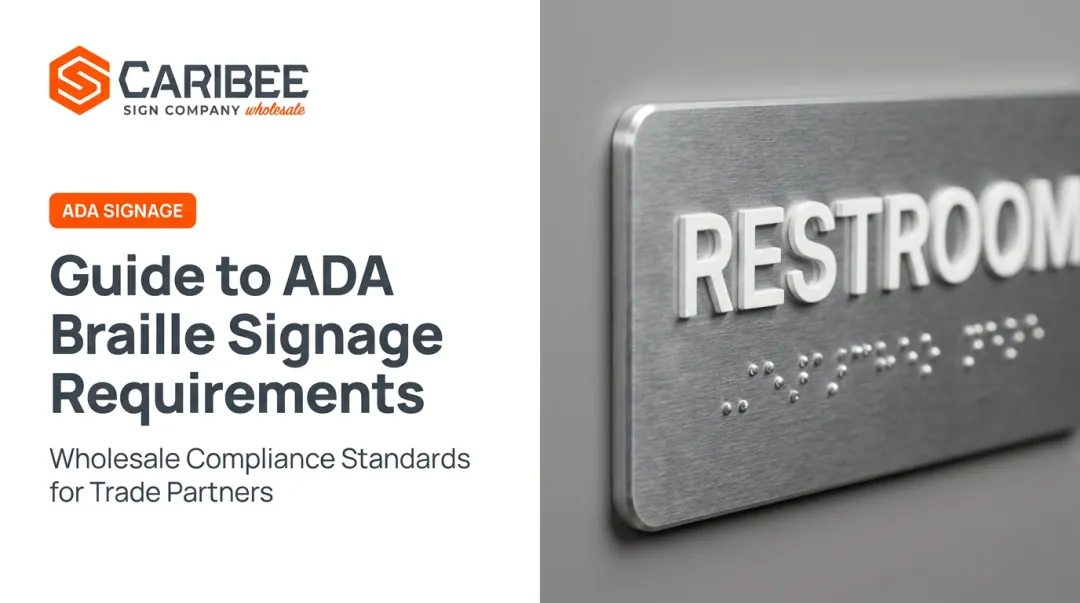
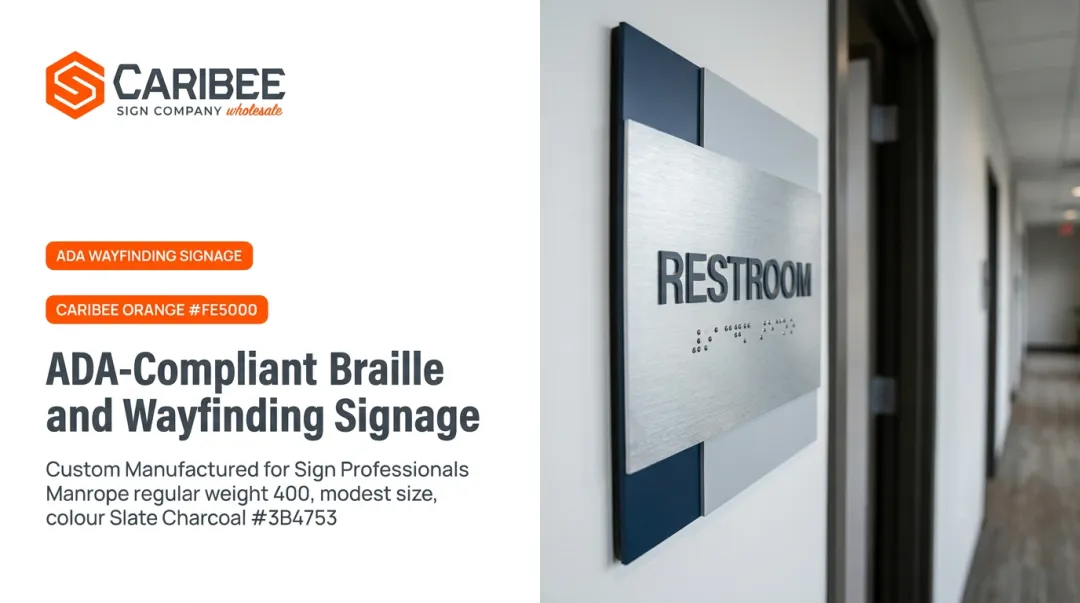
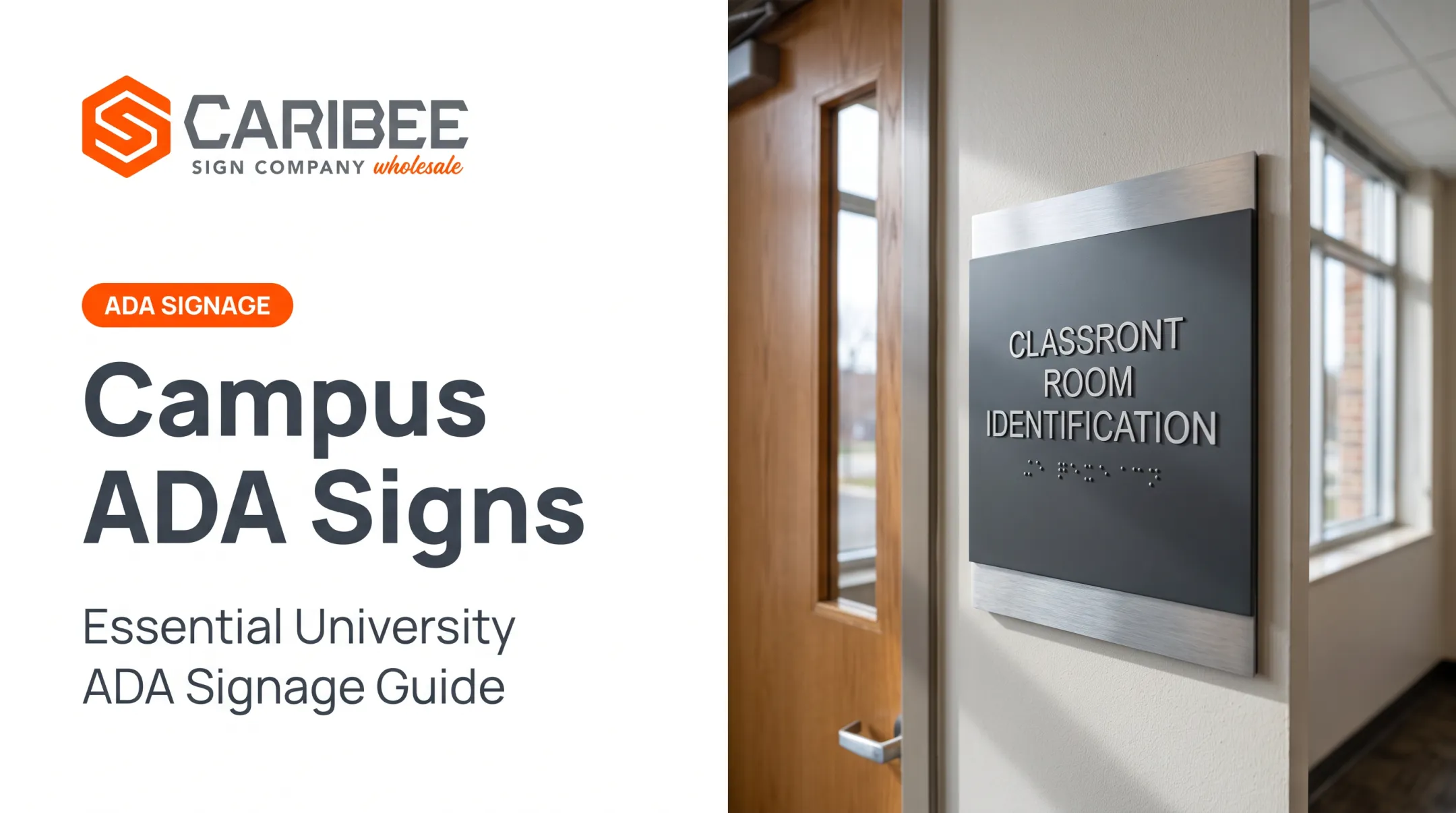
Tactile signage combines raised text characters with raised Braille dots, letting visually impaired individuals read room names, numbers, and directional information by touch. The key word is raised. A sign can display perfect Braille dot patterns visually and still fail completely if those dots are printed flat rather than physically embossed.
That's exactly what happened at Bapst Library. The sticker looked right to sighted eyes. It was useless to the people it was supposed to serve.
Printed or flat Braille dots are not ADA-compliant, period. They don't serve the intended function regardless of how accurate the translation is.

Why Campuses Need This More Than Most Buildings
A typical office building might have a few dozen permanent rooms requiring signage. A university campus has thousands:
- Classrooms and lecture halls across multiple departments
- Dorm rooms, floor indicators, and shared residential spaces
- Labs, offices, libraries, dining halls, and recreation centers
- Stairwells and restrooms in every building
That density means one sourcing mistake or one bad batch of signage can multiply across hundreds of locations before anyone notices.
ADA Requirements for Braille Signage on Campus
ADA Section 216.2 requires tactile signage for permanent rooms and spaces on campus, including restrooms, room and floor numbers, and room names. Technical specs are in sections 703.1, 703.2, and 703.5 of the Access Board's ADA standards.
Braille and Character Specifications
- Grade 2 (contracted) Braille is required, with domed or rounded dots positioned below the corresponding text
- Braille sits below all text lines if the sign has multiple lines, and at least 3/8 inch from other tactile elements or decorative borders
- Character height must fall between 5/8 inch and 2 inches, measured by the uppercase letter "I"
- Characters must be uppercase, sans serif, with correct width-to-height ratio and spacing between letters
Mounting and Placement Rules
- Tactile baseline must sit between 48 and 60 inches above the finished floor
- Signs go on the latch side of doors, with adequate clearance for someone to approach and read without being in the door swing
- A clear floor space of at least 18 by 18 inches must be centered on the tactile characters
Contrast and Finish
Characters and background need a non-glare finish with clear contrast, either light-on-dark or dark-on-light. The federal standard doesn't specify an exact contrast percentage, but the visual difference needs to be obvious for low-vision readers who rely on sight rather than touch.
Some states and campus systems layer on additional standards, including required accessible typefaces. Always verify local code alongside federal ADA requirements before finalizing specs.

Where Universities Are Required to Install Braille Signage
ADA 216.2 requires tactile and Braille signage at permanent rooms and spaces across campus. Building type does not matter—room permanence does. Coverage must include academic, residential, and shared facilities.
Academic and Administrative Buildings
These spaces qualify as permanent rooms under ADA 216.2:
- Classrooms and lecture halls
- Department offices
- Administrative suites
Any room with a fixed number, letter, or name needs compliant tactile signage.
Residential and Common Areas
The same rule covers:
- Dorm room numbers
- Stairwell floor indicators
- Shared amenities such as laundry rooms and lounges
Stairwell exit doors specifically require tactile identification. Campuses frequently miss this detail.
Libraries, Dining Halls, and Recreation Centers
High-traffic academic spaces get overlooked as often as obscure back offices. Identical requirements apply to:
- Libraries
- Dining halls
- Gyms and student centers
Room permanence, not building type, determines whether a sign needs to be tactile.

Common Compliance Mistakes on College Campuses
Three mistakes show up again and again in campus audits and complaints:
- Printed instead of raised Braille. The Bapst Library sticker is the clearest example — dots that look right but can't be read by touch.
- Inconsistent signage across buildings. Phased renovations often leave older, non-compliant signs standing next to newer compliant ones, creating a confusing patchwork across campus.
- Missing signage in newer or repurposed spaces. Stairwells are a frequent gap: facilities teams treat them as secondary spaces, even though ADA classifies them as permanent.
A 2016 OCR investigation into California State University, Hayward found many classrooms had no Braille at all. Others had only small pieces of Braille tape stuck near the door handle, which OCR described as difficult to locate and inconsistently placed.
The resolution required campus-wide permanent signage within nine months, plus a full inventory of remaining gaps. That's the kind of corrective project no facilities department wants to manage under a deadline.
Sourcing Durable, Compliant Signage for Large Campuses
Campus signage takes a beating. High foot traffic, frequent cleaning, and years of daily contact wear down lower-quality materials fast. A sign that looks compliant on installation day but degrades within two years creates the same problem as one that was never compliant to begin with.
Material and fabrication choices matter more than most facilities teams realize:
- Precise CNC routing and laser engraving produce raised characters and Grade 2 Braille dots that hold their shape under repeated touch
- Stainless steel, brushed metal, acrylic, and wood each offer different durability and aesthetic tradeoffs depending on the location
- Lower-quality printed alternatives may pass a quick visual check but fail the touch test that actually matters

For sign companies managing multi-building university rollouts, a manufacturing partner that specializes in ADA signage removes a lot of guesswork. Caribee Sign builds ADA-compliant Braille and tactile signage in-house at its St. Louis facility, so code-compliant signs stay consistent at campus scale.
Sign companies serving campus clients can:
- Submit specs and get quotes back within one business day
- Use Caribee's in-house Grade 2 Braille translation on every order
- Keep multi-building rollouts consistent from building to building
Frequently Asked Questions
What is braille signage?
Braille signage combines raised text characters and raised Braille dots so people who are blind or have low vision can read room and directional information by touch.
What are the requirements for braille signage?
ADA requires Grade 2 Braille, raised tactile characters between 5/8 inch and 2 inches tall, mounting between 48 and 60 inches above finished floor (AFF), and high-contrast, non-glare finishes.
Are all campus buildings required to have braille signage?
Yes. Any permanent room or space—academic, residential, or recreational—must have tactile signage under ADA rules, regardless of building type.
Why do some campus braille signs fail inspection even if they look correct?
Signs with printed rather than raised dots, incorrect character sizing, or improper mounting height often fail ADA checks even when they look fine. Touch-testing matters as much as a visual review.
How can a university fix non-compliant signage found on campus?
Report the issue to the campus ADA coordinator or facilities department right away. Qualified signage vendors can usually produce compliant replacements quickly once specs are confirmed.
Can universities be penalized for non-compliant braille signage?
Students or visitors can file complaints with a campus ADA coordinator or the Department of Education's Office for Civil Rights. That can lead to corrective agreements or federal funding consequences.