
For students and visitors with disabilities, inconsistent or outdated ADA signage isn't just an inconvenience — it's a real barrier to independent access. And for the institution, it's a legal liability. 21% of undergraduates report having a disability, according to NCES data, and many of them rely on tactile, Braille, and visual wayfinding cues every day.
This guide covers what campus ADA signage actually is, the legal requirements behind it, the sign types every campus needs, design and placement specs, common mistakes, and how to find a manufacturing partner you can trust.
Key Takeaways
- ADA and Section 504 require compliant campus signage for permanent rooms, accessible routes, and regulated spaces
- Tactile characters, Braille, contrast, and mounting height must follow strict ADAAG specifications
- University programs need room ID, restroom, wayfinding, parking, and emergency signs
- Non-compliance risks fines, lawsuits, and reputational damage
- An experienced ADA signage manufacturer lowers compliance risk on large campus rollouts
What Is Campus ADA Signage, and Why Do Universities Need It?
Campus ADA signage helps people with disabilities navigate and use campus buildings independently. Common examples include tactile room IDs, Braille restroom markers, and accessible parking signs. This is functional infrastructure built for independent access.
Two federal frameworks drive the requirement:
- ADA (1990): Public universities fall under Title II; many private institutions fall under Title III as places of public accommodation
- Section 504 of the Rehabilitation Act: Bars disability discrimination in any program that receives federal funding, which covers nearly every college that accepts federal student aid
The need shows up clearly in the data. Beyond that 21% undergraduate disability figure, NCES research shows that 85% of students with disabilities at four-year colleges received some form of accommodation or service. Signage is part of that support system, whether students realize it or not.
The operational risk is real. In 2006, the Department of Justice reached a settlement with the University of Chicago after finding ADA violations tied to doors, restrooms, signage, and accessible routes. The university had to put a campus-wide corrective plan in place. That is the kind of enforcement action campuses want to avoid.
Campus signage also differs from K-12 work in scale and autonomy. College students navigate independently across dozens of buildings with different ages, layouts, and construction eras. A consistent, campus-wide signage system is essential rather than optional.

Essential Types of ADA Signs Every Campus Needs
Room Identification Signs
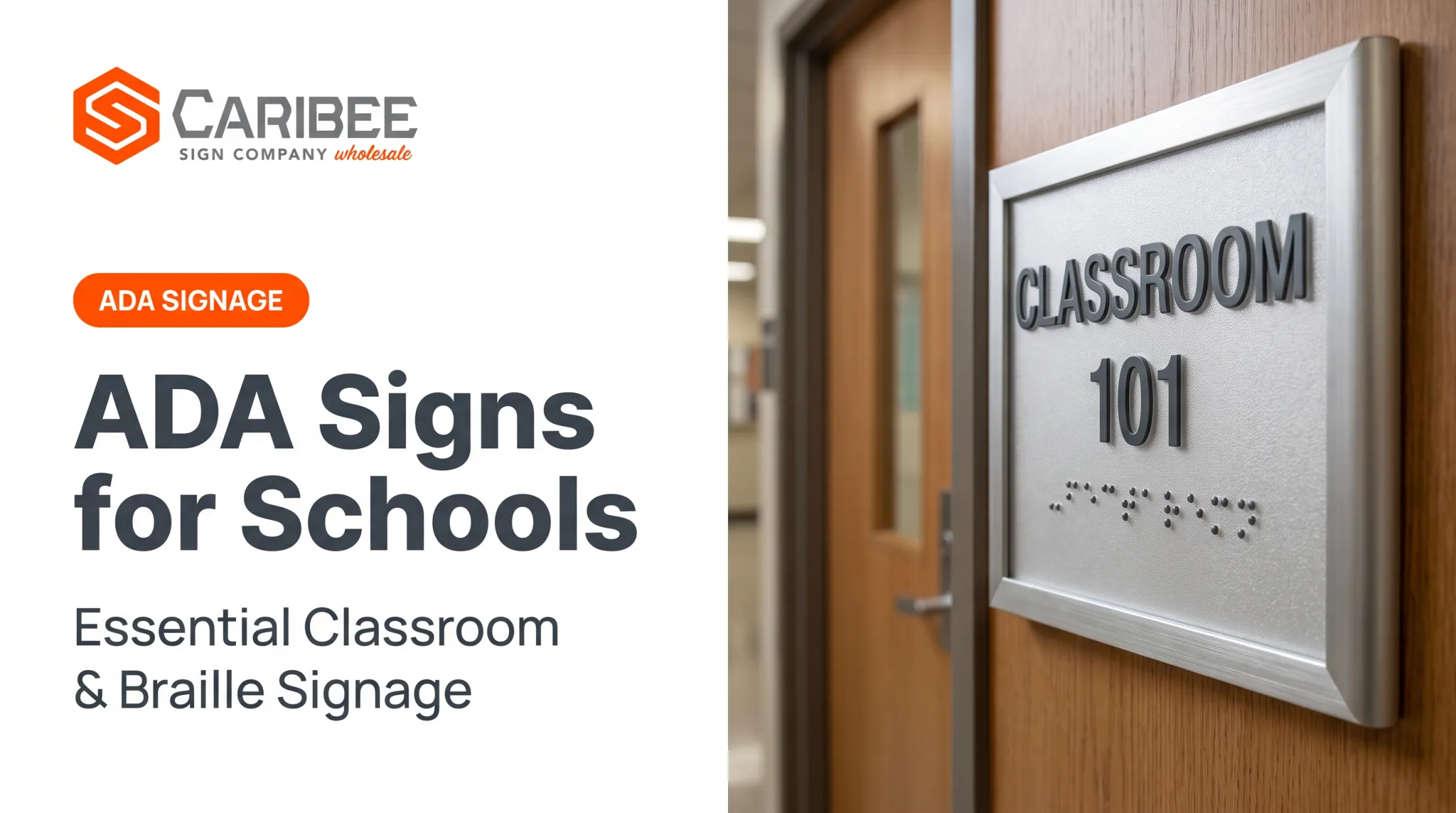
Every permanent classroom, office, and lab door needs signage that includes raised tactile characters, Grade 2 Braille, and correct placement on the latch side of the door. These requirements fall under Sections 703.1, 703.2, and 703.5 of the ADA Standards.
Signs used temporarily for 7 days or less aren't required to meet Section 216 standards — though that exception gets misused often.
Restroom & Locker Room Signs
Restroom and locker room signage across academic and residential buildings needs:
- Tactile text and Grade 2 Braille identifying the room
- The International Symbol of Accessibility where relevant
- Pictograms with a tactile text descriptor and a field at least 6 inches high
- Non-glare finish with light-on-dark or dark-on-light contrast
Where an existing restroom doesn't fully comply, directional signage must point to the nearest accessible option.
Directional & Wayfinding Signs
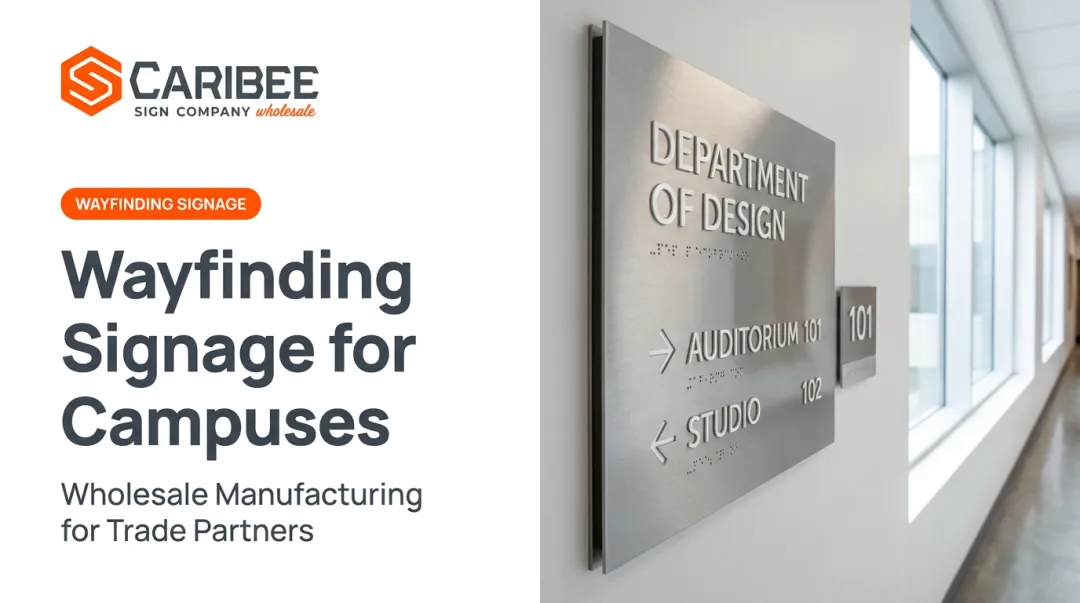
Multi-building campuses depend on clear wayfinding. "You are here" maps, building directories, and directional signs cut the confusion that comes with sprawling layouts and mixed building ages.
Unlike room ID signs, directional signage generally only needs visual compliance under Section 703.5. Full tactile and Braille requirements apply only when the sign also marks an egress route.
Accessibility & Parking Signs
Accessible parking spaces require signage with the International Symbol of Accessibility under Section 502.6:
- Van-accessible spaces need the added "van accessible" designation
- Signs must sit at least 60 inches above the ground
- The same ISA marking applies to accessible entrances, ramps, and elevators campus-wide
Emergency & Evacuation Signage
Every accessible space needs at least one accessible means of egress, and at least two where multiple exits are otherwise required. Exit doors, stairwells, and passageways need tactile signage, and areas of refuge require signage that complies with Section 703.5.
This category carries real safety weight. A missing or non-compliant sign becomes a hazard the moment an emergency hits.

ADA Sign Design & Placement Specifications
Getting the specs right matters as much as picking the right sign type.
Tactile Text & Braille
- Raised characters project at least 1/32 inch, uppercase only, sans-serif, no italics or scripts
- Character height ranges from 5/8 inch to 2 inches
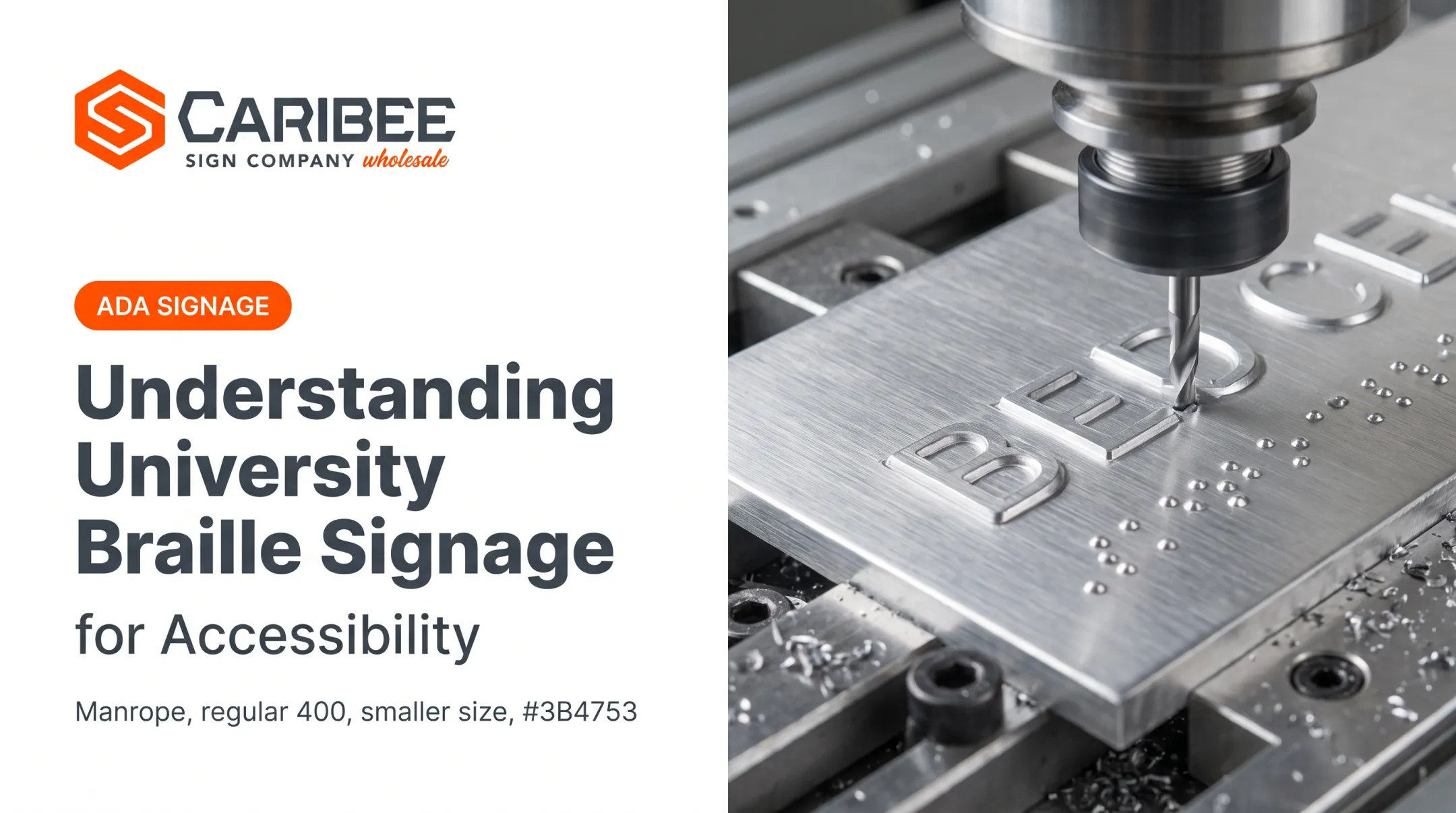
- Braille must be Grade 2 (contracted), positioned below the tactile text, separated by at least 3/8 inch
A common question: do ADA signs need to be all caps? Only tactile characters. Visual text can mix upper and lowercase, as long as it stays in a conventional, non-decorative font.
Dimensions & Mounting Height
Tactile characters must be mounted 48 inches minimum to 60 inches maximum above the floor, measured from the baseline. Placement matters too:
- Mount on the latch side of the door
- For double doors with one active leaf, use the inactive leaf
- Provide an 18-by-18-inch clear floor space centered on the sign, outside the door swing

Contrast & Materials
The ADA Standards require non-glare finishes with strong light-on-dark or dark-on-light contrast, though they don't specify an exact numeric ratio.
For outdoor and high-traffic campus signage, durable materials matter: stainless steel, brushed metal, and acrylic hold up better over years of weather and foot traffic than lower-grade substrates.
Consistency across buildings matters just as much as individual sign compliance. A campus where every building uses a different font, mounting height, or color scheme undermines the whole point of wayfinding.
Common Compliance Mistakes & How to Avoid Them
Even well-intentioned facilities teams get tripped up. These mistakes show up most often:
- Inconsistent placement between buildings, breaking user expectations campus-wide
- Misusing the temporary-sign exemption: a "printed paper sign" that's been up for months still needs tactile and Braille elements
- Wrong mounting height: signs installed above 60 inches or below 48 inches fail compliance even if the sign itself is correct
- Blocked clear floor space in front of tactile signage, which blocks wheelchair access to the sign
- Treating directional signs like room ID signs (or vice versa); they have different requirements
A periodic signage audit catches these problems before they become liabilities. Walking every building with a checklist (mounting height, contrast, tactile elements, Braille placement) is far cheaper than a lawsuit or an OCR complaint.
Choosing a Reliable ADA Signage Partner for Your Campus
Campus rollouts involve hundreds, sometimes thousands, of individual signs across dozens of buildings. Rework and delays aren't just annoying. They push back entire renovation timelines.
Sign companies fulfilling large university orders need a manufacturer that gets it right the first time. That means:
- In-house production (not farmed out to multiple vendors with inconsistent quality)
- Built-in ADA compliance guidance, so specs don't get missed
- Fast quote turnaround for large, multi-building projects
Caribee Sign manufactures room ID, restroom, wayfinding, parking, and emergency signage entirely in-house at its St. Louis, Missouri facility, using CNC routing, laser engraving, and multiple Braille production methods. The company handles Braille translation internally, so sign companies don't need to supply Grade 2 Braille copy themselves. That is one less thing to get wrong on a campus-wide order.

Wholesale quote requests typically get a response within one business day, with pricing based on sign type, quantity, materials, and complexity. One trade partner, Hugh-Carolina Sign Co., calls Caribee its go-to for ADA signage, citing responsiveness and consistent quality.
Before committing to a full campus rollout, request a sign schedule review with your manufacturer. Standardize materials, mounting heights, and tactile specs across every building upfront so you catch mismatches before installation, not after.
Frequently Asked Questions
What is an ADA sign?
An ADA sign is signage built to help people with disabilities navigate and use a facility independently. It typically includes tactile characters, Grade 2 Braille, and high-contrast visual text designed to meet ADAAG specifications.
Do ADA signs need to be all caps?
Tactile characters must be uppercase under the ADA Standards. Visual text, however, can use upper and lowercase letters as long as the font stays conventional and non-decorative.
What are the dimensions of an ADA sign?
Tactile character height ranges from 5/8 inch to 2 inches, and signs must be mounted 48 to 60 inches above the floor, measured from the character baseline. Exact sign size varies by message length and sign type.
Are colleges required to have ADA signage on every door?
Permanent, regulated rooms like classrooms, offices, and restrooms require compliant signage. Spaces used temporarily for 7 days or less are exempt from these requirements under Section 216.
How much does it cost to bring a campus's signage into ADA compliance?
Costs vary by quantity, sign type, materials, and building count, with no fixed federal benchmark. A project-specific quote is the most reliable way to budget for tactile, Braille, and finish requirements.