
Both look similar at a glance. However, they perform very differently once you factor in durability, compliance requirements, and cost. Choosing the wrong one can mean scratched signage in a high-traffic hallway, engraving that doesn't hold up, or an ADA sign that fails inspection.
This guide breaks down composition, cost, durability, and real-world use cases, so sign companies and businesses can match the material to the project.
TL;DR
- Cast acrylic is poured into molds, delivering superior clarity and scratch resistance at a higher price point
- Extruded acrylic is rolled through dies, making it cheaper and easier to thermoform for large orders
- Cast fits premium, engraved, or ADA-compliant signage; extruded fits bulk, budget-conscious projects
- Pick by order volume, fabrication method (engraving vs. bending), and budget
Extruded vs Cast Acrylic: Quick Comparison
| Factor | Extruded Acrylic | Cast Acrylic |
|---|---|---|
| Cost | More cost-effective, better for bulk orders | Higher price due to labor-intensive molding |
| Manufacturing | Rolled through a die into continuous sheets | Poured between glass molds, then cured |
| Clarity | Slightly lower, more prone to variation | Higher optical clarity, ideal for engraving |
| Durability | Softer, scratches more easily | More scratch and chemical resistant |
| Fabrication | Easier to flame polish and thermoform | Cleaner CNC/laser edges, harder to bend |
Both materials transmit roughly 92% of visible light when clear, according to ACRYLITE's technical data. So clarity differences show up more in machining and finishing than in raw transparency.

What Is Extruded Acrylic?
Extruded acrylic is sheet acrylic made by pushing molten resin through rollers and a die, creating a continuous sheet rather than individual cast pieces. Sign fabricators favor that continuous process for high-volume production.
Core benefits:
- Lower cost per sheet on volume orders
- Tighter thickness tolerance across the sheet
- Easier thermoforming for curved or dimensional shapes
One detail sign fabricators should watch: extrusion direction can affect how the sheet behaves when cut or bent. A panel that bends cleanly in one direction may crack or warp in another, according to Regal Plastics.

Use Cases of Extruded Acrylic
Extruded acrylic works best where volume matters more than precision:
- Standardized, multi-location signage rollouts
- Window and point-of-purchase signage
- Basic interior signs with minimal fabrication needs
Example industries:
- Retail chains refreshing seasonal signage
- Corporate wayfinding programs
- Promotional window displays needing dozens or hundreds of identical panels fast
What Is Cast Acrylic?
Cast acrylic is made by pouring liquid acrylic resin between glass panes, then curing each sheet individually in an autoclave. According to ACRYLITE, assembling and separating a mold for every single sheet makes this process labor-intensive, which explains the price difference.
Core benefits:
- Superior optical clarity for back-painted signage
- Cleaner CNC and laser engraving results
- Better chemical resistance and higher service temperature tolerance
- Broader range of available colors, textures, and thicknesses
Use Cases of Cast Acrylic
Cast acrylic earns its premium price in applications where precision and longevity matter:
- Premium retail and trade show displays
- Dimensional lettering for lobbies and storefronts
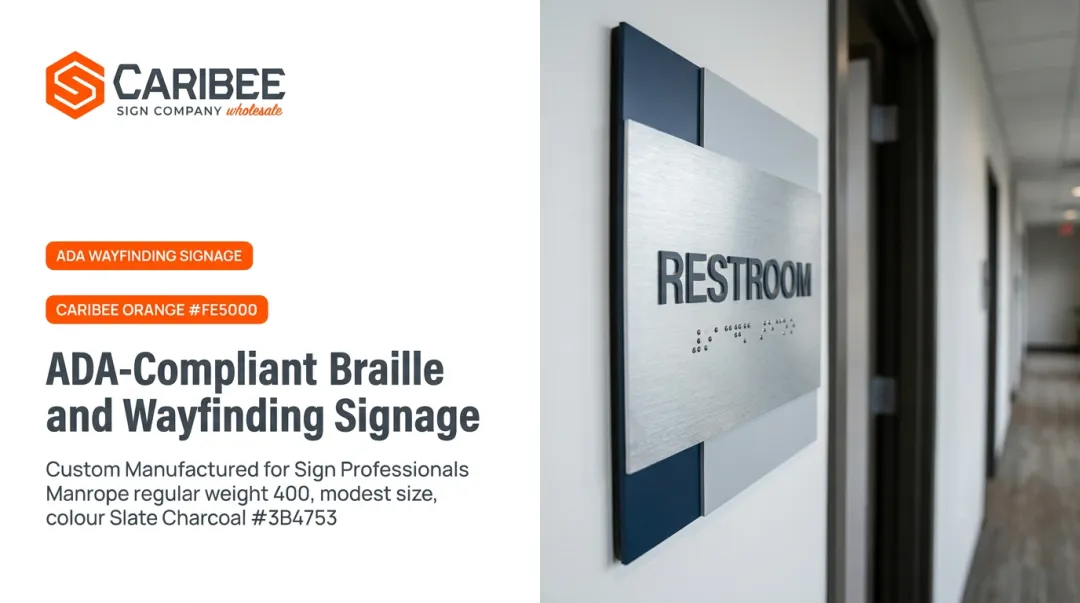
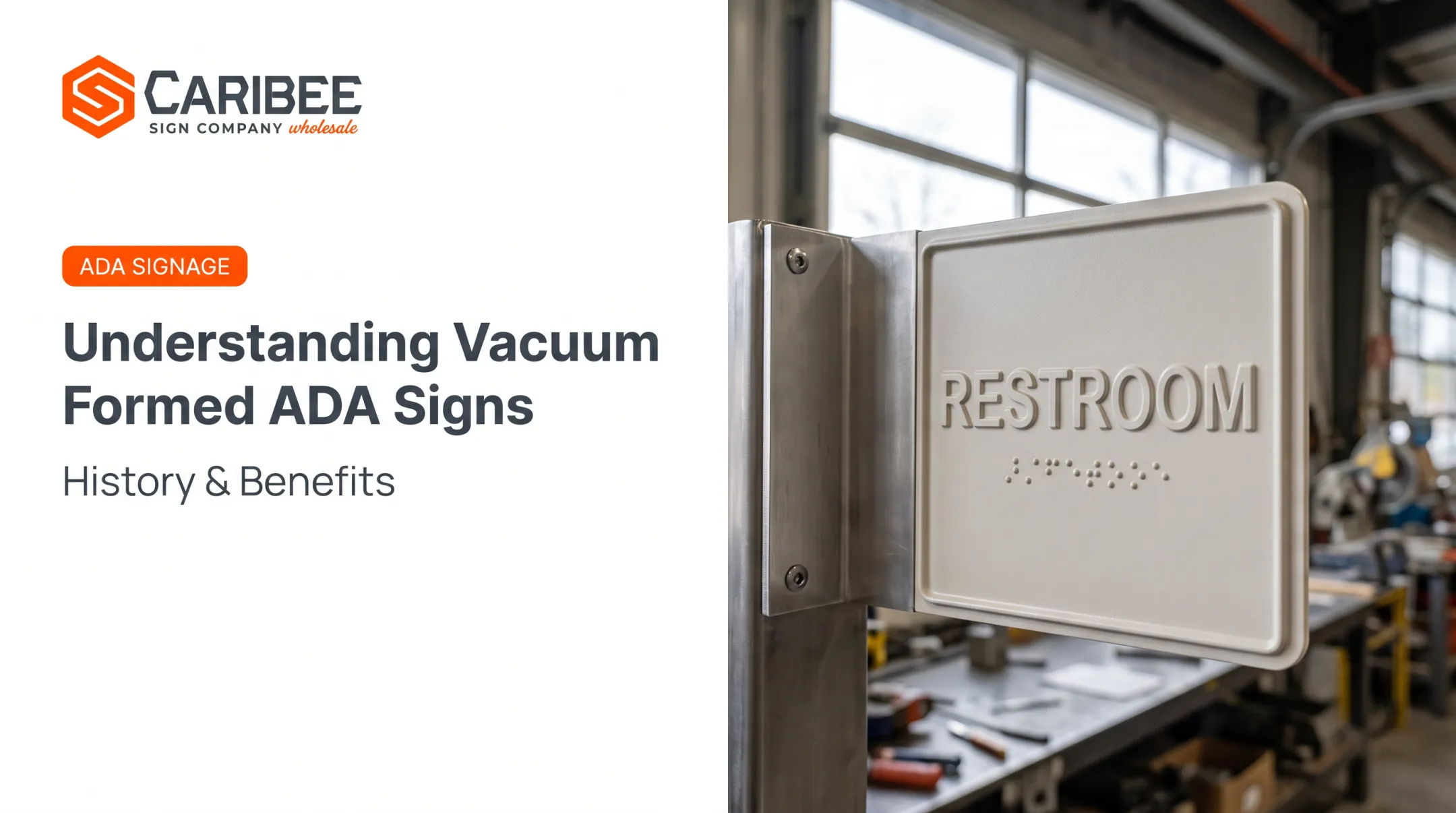
- ADA-compliant signage requiring precise tactile characters and Grade 2 Braille
Example industries: hospitality, healthcare, corporate offices, and government facilities that need wayfinding to hold up to code inspections and years of foot traffic.

For ADA work, material choice is a compliance decision. Caribee Sign builds ADA-compliant signage with cast acrylic so tactile characters and Grade 2 Braille stay sharp through heavy use—sign companies get inspection-ready product without rework.
Extruded vs Cast Acrylic: Which Is Better for Your Sign Project?
There's no universal winner. The right call depends on five factors:
- Budget — extruded costs less on large orders
- Order volume — bulk runs favor extruded's continuous production
- Design complexity — detailed engraving favors cast
- Fabrication method — bending and thermoforming favor extruded; CNC and laser engraving favor cast
- Indoor vs. outdoor placement — cast's chemical resistance holds up better outdoors and in chemically exposed settings
Quick pick: choose extruded for large-volume, budget-friendly, simple signage. Choose cast when ADA compliance, engraving precision, or brand image are on the line.
Real World Example: Choosing the Right Acrylic for ADA Compliance
Sign companies fielding multi-location ADA signage orders face a specific tension: compliance requirements (tactile characters, Braille, contrast ratios) leave little room for error, but clients still expect consistent quality across dozens or hundreds of signs.
Acrylic grade is part of that equation. For ADA work, shops typically favor cast acrylic when signs need crisp CNC-routed tactile characters and stable edge definition across a full run. Extruded acrylic costs less and suits many flat or printed pieces, but it is more prone to chipping and uneven profiles when you push detailed raised copy.
ADA material checks that usually decide the grade:
- Clean machining for tactile characters and Grade 2 Braille
- Consistent thickness and contrast across multi-site reorders
- Durability under routing, engraving, and finishing without soft edges

Hugh-Carolina Sign Co. faced exactly this pressure. Per Hugh Welch, Caribee Sign became their go-to ADA partner because the team is easy to work with, highly responsive, and consistently delivers products that meet requirements—including the right acrylic build for each job.
Caribee typically responds to wholesale quote requests within one business day. That turnaround helps when a sign company is juggling compliance deadlines across multiple client sites and needs material guidance as well as production.
Takeaway: Scale ADA programs with the acrylic grade the specs demand (often cast for tactile/CNC work) and a responsive wholesale partner. Tactile accuracy depends on both the sheet and who fabricates it.
Conclusion
Neither extruded nor cast acrylic is universally "better." The right material depends on the sign's purpose, visibility requirements, and compliance needs.
Extruded acrylic wins on cost efficiency for large, simple sign runs. Cast acrylic wins on durability and precision, especially in ADA-regulated environments where tactile accuracy and Braille legibility can't be compromised.
For sign companies making this call across multiple projects, a manufacturer that understands both materials and delivers consistent, compliant results takes the guesswork out of sourcing.
Frequently Asked Questions
Which is better for signs: extruded or cast acrylic?
Cast acrylic suits detailed, high-visibility, or compliance-driven signage thanks to its clarity and engraving quality. Extruded acrylic suits budget-conscious, high-volume, simple signage projects.
How can I tell if my acrylic (or plexiglass) is cast or extruded?
Cast acrylic generally produces a cleaner cut edge after CNC machining, while extruded edges can look less clean depending on the direction of extrusion. Masking film alone (paper vs. plastic) isn't a reliable indicator — either type can use either.
What are the different types of acrylic signs?
Common types include engraved ADA signs, back-painted signs, dimensional letter signs, and window or point-of-purchase signage. Each may favor a different acrylic type based on fabrication needs.
Which is cheaper, cast or extruded acrylic?
Extruded acrylic is generally cheaper. Its continuous manufacturing process is less labor-intensive than the individual mold-and-cure process required for cast sheets.
How strong is cast acrylic compared to glass?
Cast acrylic resists impact and shattering far better than standard window glass. Acrylic sheet in general is much tougher than glass — some grades are rated 10-20 times stronger, per ACRYLITE.
Can extruded acrylic be used for ADA-compliant signage?
Extruded acrylic can work for basic signage, but cast acrylic is generally preferred for ADA signs. Its superior engraving results and durability better support the tactile precision compliance requires.