
Introduction
Tenants move out. Departments rebrand. A conference room becomes a wellness room, then a storage closet six months later. Static, one-piece signage can't keep up with that pace of change.
Every update means fabricating a brand-new sign, removing the old one, and patching the wall it leaves behind. That's expensive, slow, and hard on your budget when it happens across dozens of doors.
Modular signage systems solve this by building signs from interchangeable parts instead of single fixed units. Swap an insert, not the whole sign.
This article covers how modular systems work, the benefits they deliver, what ADA compliance requires, and how to pick a manufacturing partner who won't leave you with mismatched signs three years from now.
Key Takeaways
- Modular signage lets you swap the insert, not the whole sign, when messages change
- Facilities save money and time by replacing components instead of entire units
- Aluminum-based systems last for years and stay recyclable at end of life
- Hospitals, universities, and offices see the most value from periodic room changes
- ADA compliance depends on manufacturer precision, not the modular format itself
What Are Modular Signage Systems?
A modular signage system combines separate, reusable parts: a frame or holder, an insert or panel, and mounting hardware. These pieces snap, slide, or lock together to form a finished sign. Change the insert, and you've changed the sign, without touching the wall.
The same component architecture supports several sign types:
- Room ID signs for offices, patient rooms, and classrooms
- Directory signs listing tenants or departments
- Wayfinding signs that guide visitors through a building
- Suspended and projecting signs for hallway or ceiling mounting

Materials That Hold Up Over Time
Aluminum, acrylic, and ABS plastic are the most common substrates in modular frames. ASI's guide to modular signage notes that these systems support custom colors, graphics, and finishes without sacrificing the swap-in, swap-out mechanics that make them modular in the first place.
Aluminum tends to be the preferred choice for frames and structural components. It resists corrosion, holds up to repeated handling during insert changes, and can be recycled repeatedly without losing its core properties. That combination of durability and recyclability makes it a practical long-term investment rather than a short-term fix.
Digital Printing Adds Design Flexibility
Modern digital printing lets facilities customize modular frames with branded colors, wood-look finishes, or metallic accents. Manufacturers typically offer dozens of semi-standard finish and color options, including foil finishes that mimic wood or concrete textures.
The point isn't just aesthetics. A modular frame with a custom finish still functions like a standard one. You get design flexibility without losing the underlying system's adaptability.
Modular vs. Custom: The Real Trade-Off
Custom-built signage is fabricated as a one-off unit. It offers full design freedom for a single install, but there's no built-in mechanism for updates. Modular systems trade some of that upfront design freedom for long-term adaptability.
In practice, most facilities need both flexibility now and the ability to change things later. Modular systems meet that second requirement.
Key Benefits of Modular Signage Systems
Flexibility and Adaptability
When a tenant moves out or a department gets renamed, you don't need a new sign. You need a new insert. That single swap updates the sign in minutes, not days.
Cost and Time Savings
Retaining the frame and mounting hardware while swapping only the insert avoids the fabrication and reinstallation work that a full custom sign requires. You're not paying for:
- New raw material for the entire sign body
- Repeat mounting labor and wall patching
- A full production cycle for a change that's really just a name swap
Sustainability
Modular systems reduce waste by design. You throw away a small insert instead of an entire sign body.
Aluminum, the most common frame material, supports this further: the aluminum industry reported a 43% consumer recycling rate for aluminum cans in 2023. That figure applies to beverage cans specifically, not architectural signage, but it illustrates aluminum's broader reputation as a material that gets a second life instead of ending up in a landfill.
Design Consistency
Using one modular platform across room signs, directories, and suspended wayfinding creates a cohesive look throughout a building. Visitors read the same fonts, colors, and materials at every touchpoint. That consistency builds trust in the wayfinding system itself.
Reduced Installation Damage
Every time you remove and reinstall a full sign body, you risk damaging paint and drywall. Insert-based updates skip that step entirely. The frame stays mounted. Only the small panel inside it changes.
Modular Signage and ADA Compliance
ADA-compliant room ID signs must meet specific technical requirements under the 2010 ADA Standards for Accessible Design:
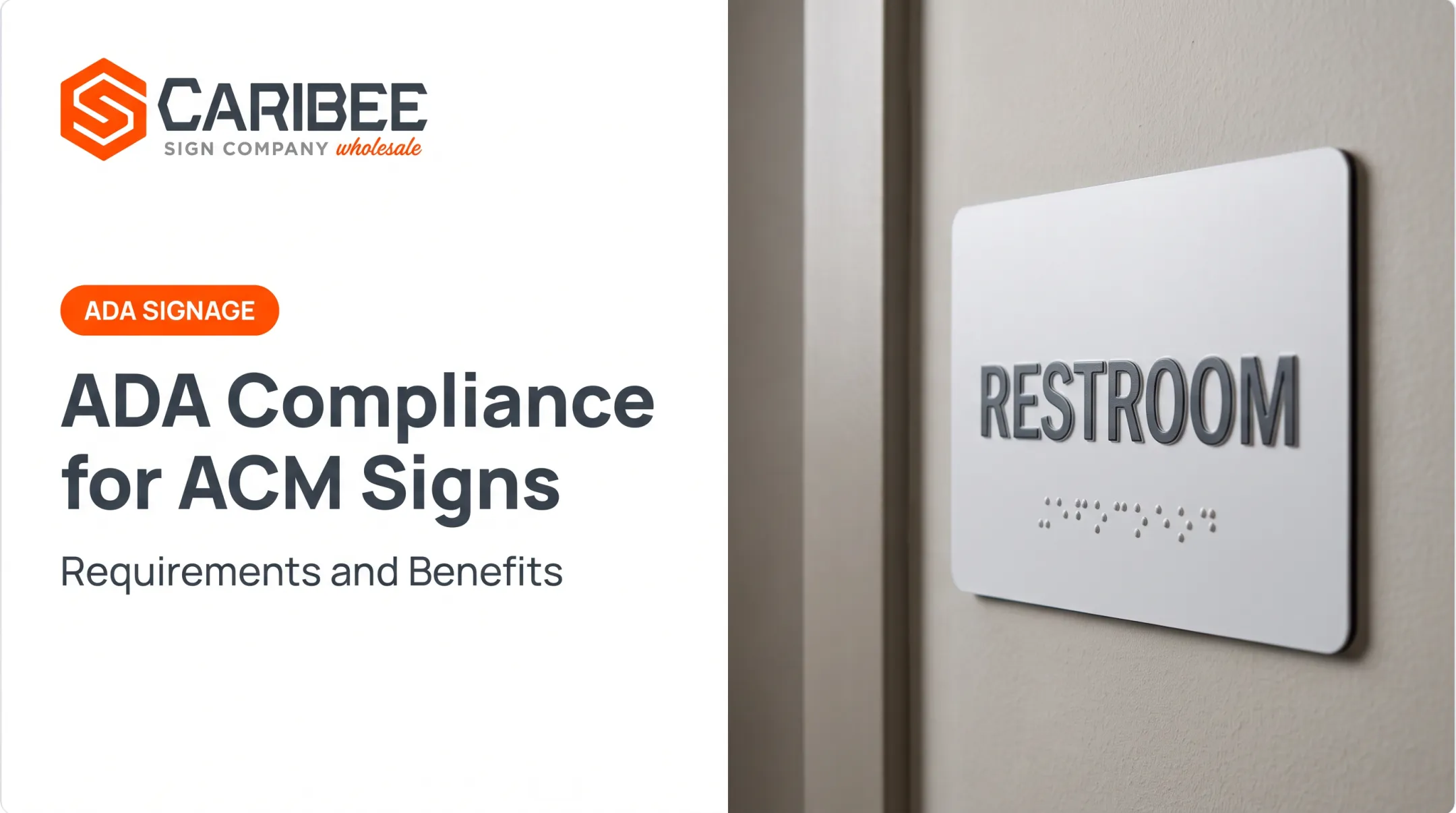
- Braille: Contracted Grade 2 Braille with domed or rounded dots
- Raised characters: Uppercase, sans-serif, raised at least 1/32 inch
- Mounting height: Tactile character baseline between 48 and 60 inches from the floor
- Placement: On the latch side of the door, or the nearest adjacent wall if no latch-side space exists

Why Modular Fits ADA Signage So Well
Hospitals, universities, and offices reassign rooms constantly. A patient room becomes a supply closet, or a department moves down the hall. Every one of those changes technically requires an updated ADA sign, since the room name or occupant information on the tactile panel has to stay accurate.
Modular systems handle this turnover without forcing a full sign replacement every time a room changes hands. Only the insert changes; the frame stays in place.
Two Approaches, One Compliance Standard
Facilities generally choose between two modular ADA strategies:
- Removable paper inserts behind a clear window, useful for information that changes often but doesn't require tactile elements
- Permanent tactile and Braille panels manufactured to exact spec, swapped as complete inserts when room information changes
Both approaches can maintain full compliance. What matters is precision in manufacturing, not which format you choose.
The Risk of Mixing Vendors
Sourcing modular ADA components from multiple non-specialized vendors creates real problems:
- Finishes and colors that don't match between original installs and reorders
- Inconsistent Braille grade or character height across different batches
- Slower turnaround when a reorder needs to match specs from years earlier
Caribee Sign manufactures permanent tactile and Braille panels in-house at its St. Louis, Missouri facility, using precision engraving, laser engraving, and CNC router cutting to hold every panel to the same regulatory spec. For sign companies managing reorders months or years after an original install, that consistency prevents mismatched panels and costly rework on every subsequent order.
Where Modular Signage Systems Work Best
Modular signage delivers the most value in environments with moderate, ongoing change, not constant change and not zero change:
- Hospitals: Departments consolidate, services expand, patient rooms change function regularly
- Universities: Buildings get renamed, departments shift floors, wayfinding needs updates every academic cycle
- Corporate offices: Rebranding and departmental reshuffling happen often enough to justify a flexible system
- Government buildings: Multi-year renovation projects often require phased signage updates across many rooms
Retail environments move faster than modular signage is designed for. Promotional signage changes weekly or even daily, making digital displays or temporary signage a better match than modular hardware built for durability, not rapid rotation.
One Product Family, Multiple Verticals
Sign companies benefit from carrying a single modular product family that serves healthcare, education, and corporate clients from one core inventory base. This approach means fewer SKUs to manage, one consistent finish standard, and a simpler reorder process across every client vertical.
Choosing the Right Modular Signage Manufacturing Partner
Not every manufacturer treats modular ADA signage the same way. Three factors separate a dependable partner from a risky one:
- Color and finish consistency over time. Reorders placed years after the original install should look identical, which requires tight internal quality control rather than inconsistent third-party suppliers.
- A responsive, low-friction ordering process. Fast quote turnarounds and dependable production windows keep multiple concurrent client projects moving without a week-long wait.
- Full ADA compliance expertise. The manufacturer should understand Braille grade, tactile copy specifications, and mounting requirements at a technical level, not just as a checkbox.
Caribee Sign meets all three standards as a wholesale manufacturing partner for sign companies, responding to quote requests within one business day and producing all ADA signage in-house for over 60 years.
Hugh-Carolina Sign Co. describes Caribee as their "go-to" company for all ADA signage needs, citing responsiveness and products that consistently meet requirements.

For sign companies handling ongoing modular ADA reorders across multiple clients, that consistency matters. It's the difference between a smooth reorder and a scramble to match specs from an old order.
Frequently Asked Questions
What is the difference between modular and custom signage?
Modular signage uses interchangeable, pre-engineered components that allow faster, more affordable updates over time. Custom signage follows a one-off design, offering full creative freedom but less flexibility for future changes.
Are modular signs ADA compliant?
Modular signs can fully meet ADA requirements through correct Braille grade, raised character specifications, and mounting height. Compliance depends entirely on the manufacturer's precision, not the modular format itself.
How long do modular signage systems last?
Quality modular systems, especially aluminum-based ones, can last for decades because individual inserts simplify replacing worn or outdated components. There's no need to discard the entire sign when only the message changes.
Can modular signage be updated without removing the entire sign?
Yes. Most modular systems allow quick swaps of inserts or panels while the frame stays mounted. This avoids wall damage and skips the full reinstallation process.
What industries benefit most from modular signage?
Healthcare, education, corporate offices, and government facilities benefit most. These environments see frequent, but not constant, changes in room use and occupancy.
Is modular signage more cost-effective than custom signage long-term?
Upfront costs may be similar, but modular signage typically saves money over time. Replacement costs stay limited to individual components instead of entire sign units.