
Introduction
Wayfinding signage projects rarely land through a handshake and a referral anymore. Directories, directional signs, and ADA-compliant room identification are increasingly awarded through formal bid and RFP processes. Sealed submissions, hard deadlines, and thick paperwork often bury the actual scope.
That's where many sign companies stumble. Signage specs often sit buried in Division 10 of a 200-page project manual. ADA requirements get priced as an afterthought. Change orders show up months later when a mounting height or Braille grade fails inspection.
This guide breaks down what you need to compete:
- Types of bids you'll encounter
- Step-by-step process for responding to or issuing one
- Pitfalls that sink otherwise solid proposals
- Practices that separate winning bids from also-rans
Key Takeaways
- Wayfinding bids fall into three categories: public/government, GC-subcontractor, and private negotiated
- Signage specs typically live in Division 10 and on architectural (A) drawing pages
- Price-only evaluation criteria often lead to compliance risk and costly change orders
- ADA compliance must be addressed in the proposal stage, not after award
Understanding Wayfinding Signage in Bids & RFPs
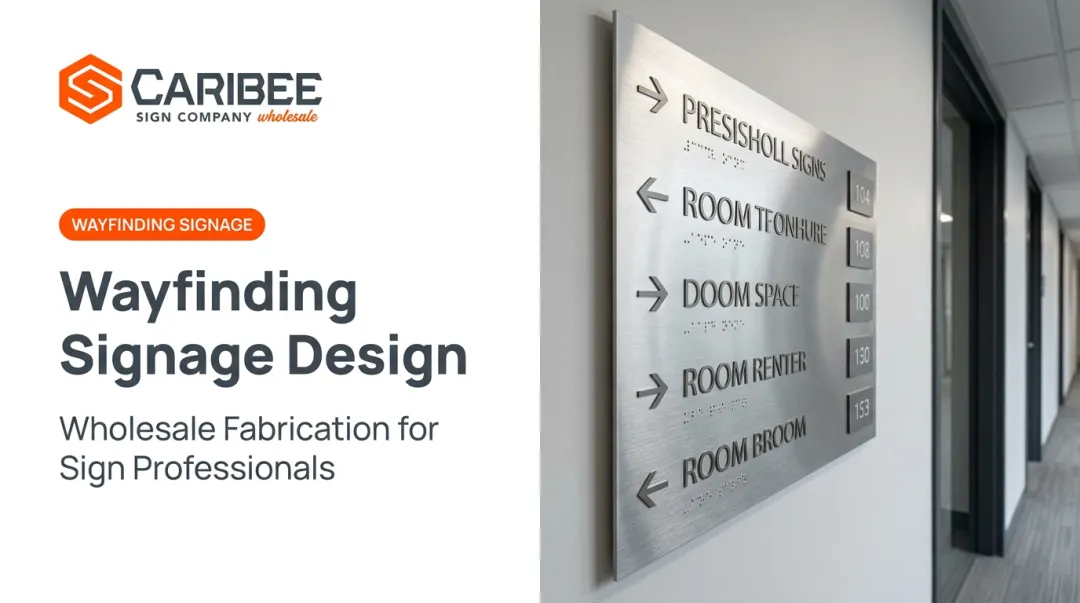
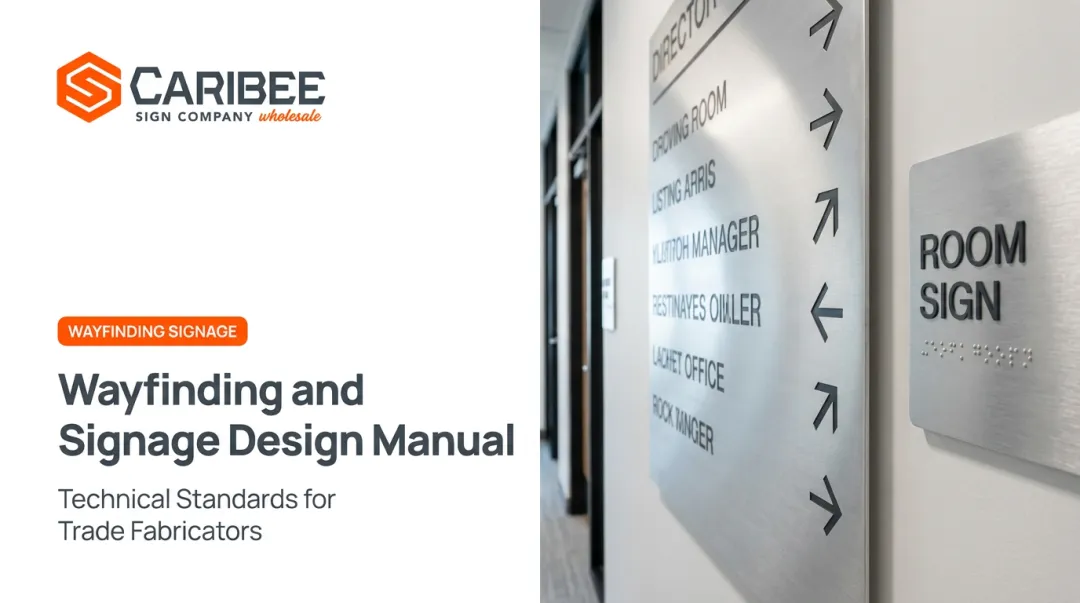
Wayfinding signage is the system of directories, directional signs, room identification, and informational signage that helps people move through a building without getting lost. Most owners don't bid it separately. Instead, it gets bundled into a broader architectural signage RFP alongside branding elements and exterior signage.
The Three Main Types of Signage in a Wayfinding Program
Nearly every wayfinding RFP asks bidders to handle:
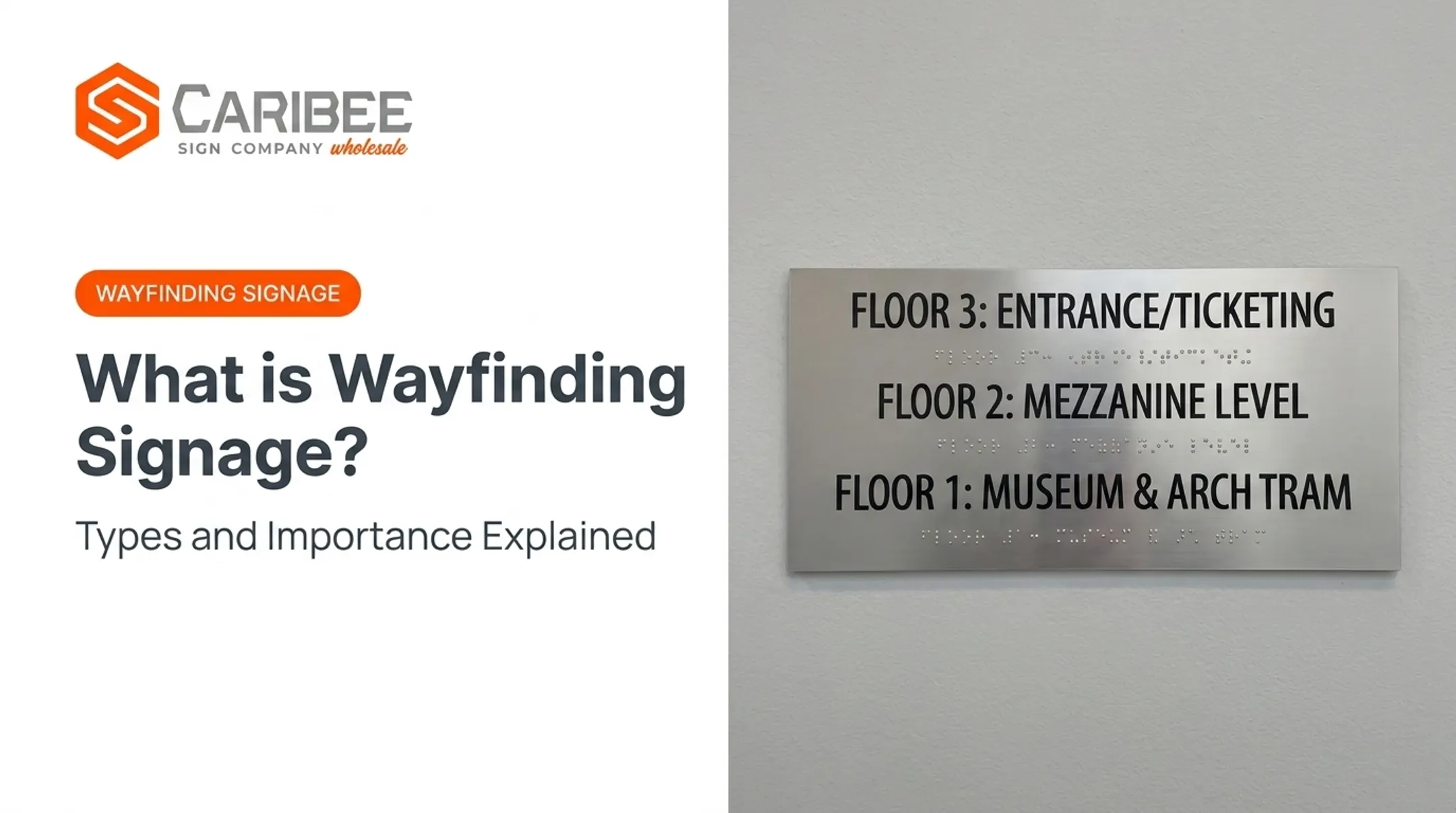
- Identification signage – Room names, numbers, and ADA-compliant tactile/Braille signs required by federal and state accessibility codes
- Directional (wayfinding) signage – Arrows, directories, and maps that guide movement through a space
- Regulatory/informational signage – Exit signs, capacity notices, and other code-required postings
Because these three categories usually arrive as a single scope, bidders need to handle ADA compliance and directional design in the same proposal. That's a different skill set than pricing a basic set of interior signs.
ADA-compliant signage carries strict technical requirements. Per the U.S. Access Board's guide to accessible signs:
- Tactile characters must fall within specific height ranges
- Braille must be Grade 2 contracted
- Mounting height is federally regulated above the finish floor
Miss any of these, and a submittal gets rejected or a completed sign gets pulled off the wall.
This is why many sign companies bidding on wayfinding work lean on a specialized manufacturing partner like Caribee Sign to handle compliance details in-house, so the bid response doesn't slow down while someone double-checks Braille grade specs.
Compliance is only half the pricing story. A well-executed wayfinding system can also save an organization money over time, according to SEGD's research on wayfinding ROI. Treat that as a directional benefit in your proposal narrative—not a hard number to quote back to a client.

Types of Bids for Wayfinding Signage Projects
Understanding what kind of bid you're responding to shapes your strategy, your pricing, and the documentation you'll need to assemble. The rules of engagement differ sharply between a sealed government bid and a private negotiation.
Public/Government Competitive Bids
Government agencies, school districts, and universities issue formal invitations to bid with strict procurement rules. Federal sealed bidding, for example, requires competitive bids and a public opening. Award goes to the responsible bidder whose conforming bid best meets the stated price factors, with no negotiation after submission, per FAR Part 14.
Before you invest time on a public bid, check for:
- Sealed submission requirements and public bid-opening dates
- Small business set-asides (8(a), HUBZone, SDVOSB, WOSB)
- A "Rule of Two" provision that may reserve the contract for qualifying small businesses
Missing an eligibility requirement after you've priced the whole job wastes real time.
General Contractor (GC) Subcontractor Bids
Commercial projects often work differently. The owner invites general contractors to bid, and those GCs solicit sub-bids from signage manufacturers and installers for the signage scope. You typically won't see the opportunity unless a GC already knows you exist.
Building relationships with local GCs and project managers before the bid drops increases your odds of getting invited at all.
Private, Negotiated, and Design-Build Contracts
Some owners skip formal bidding entirely, including on many design-build jobs. They negotiate directly with a small pool of vetted vendors, trading pure price competition for flexibility and a longer working relationship. In design-build, one team carries design and fabrication, so scope and pricing evolve together instead of through a sealed bid.
This is also where the RFP vs. RFQ distinction matters:
| Instrument | What it asks for | Best fit |
|---|---|---|
| RFP (Request for Proposal) | Full proposal: approach, qualifications, pricing | Scope isn't fully defined; design input matters |
| RFQ (Request for Quotation) | Pricing for a well-defined scope | Sign types, quantities, and specs are already locked |
Formal RFPs generally add transparency and structure to vendor selection, but private negotiation can move faster when the owner already trusts the vendor pool.
The Wayfinding Signage Bidding Process: Step-by-Step
Regardless of bid type, winning wayfinding signage work follows a repeatable process. Skip a step, and you're pricing blind.
Step 1: Research and Monitor Opportunities
Monitor these channels regularly:
- State and municipal procurement portals
- GC email distribution lists and subcontractor prequalification programs
- Industry bid platforms and plan rooms
Step 2: Locate the Signage Specs in the Bid Documents
Signage specifications are usually filed under Division 10 – Specialties, often labeled "Identifying Devices," "Room Signs," or simply "Signage" (Section 10 14 00 in current CSI formatting). Drawings typically sit on the architectural (A) pages, though details sometimes hide inside the door schedule instead.
Step 3: Review Scope, Ask RFIs, and Clarify Ambiguities
Before finalizing pricing, submit a Request for Information (RFI) on anything unclear: dimensions, materials, mounting details, or ADA requirements. Price only what's confirmed in writing, not what you assume.
Step 4: Prepare and Price the Proposal
Commonly missed cost items include:
- Installation and mobilization
- Permitting fees
- Submittals and physical samples
- Required certifications
- Warranty terms and documentation
Step 5: Submit, Follow Up, and Track the Award
Meet the deadline exactly and confirm receipt of your submission. Follow up once, professionally, to show you're paying attention. That responsiveness often matters more than bidders assume.

Common Pitfalls That Derail Wayfinding Signage RFPs
Even well-prepared bids run into trouble. Three patterns show up repeatedly.
Overweighting price. When an RFP scores price above qualifications, experience, and compliance capability, the "winning" bid can become the most expensive one in the long run.
An ENR case study details a municipality that accepted a $2.5 million low bid without properly vetting the contractor's qualifications. The project finished six months late, with an independent consultant estimating more than $1.5 million in corrective work needed before occupancy.
Rigid formats that miss what matters. A checkbox RFP format can fail to capture design quality, responsiveness, or service history, exactly the qualities that determine whether a wayfinding program still works two years after installation.
Paperwork fatigue. Sealed bidding and formal RFPs carry hidden costs in staff time and administrative overhead. A negotiated approach with a small, pre-vetted vendor pool often moves faster and costs less to administer, even if it sacrifices some competitive pricing pressure.
Best Practices for a Winning Wayfinding Signage Bid or RFP
Before requesting or submitting a bid, nail down these details:
- Number of locations and total sign count
- Sign types needed (identification, directional, regulatory)
- Dimensions, materials, and finish requirements
- Installation timeline and site access constraints
- Permitting and ADA compliance requirements
Don't rely on paper qualifications alone. Supplement the RFP with portfolio reviews, reference checks, or a small pilot project before committing to a full rollout. A single completed floor tells you more about a vendor's real capability than any proposal document.
Those same compliance details are where sign companies preparing bids can cut risk fastest: partner with a dedicated ADA specialist on the technical side of the proposal. Caribee Sign, for instance, typically turns wholesale quotes around within one business day and handles Grade 2 Braille translation and tactile character production in-house. Bidders stay out of last-minute scrambles to verify compliance under deadline pressure.
That relationship still matters after installation. Most wayfinding programs generate ongoing reorders as facilities change, and a manufacturing partner already familiar with the project specs speeds up every repeat order.

Frequently Asked Questions
What are the main types of bids for signage?
Signage bids generally fall into three categories. These include public/government competitive bids with sealed submissions, GC-to-subcontractor bids after an owner awards the general contract, and private negotiated or design-build contracts.
What are the three main types of signage?
Identification signage (including ADA-compliant room IDs), directional/wayfinding signage (arrows, directories, maps), and regulatory/informational signage (exit signs, capacity notices, and similar postings).
What are the steps in the signage bidding process?
Research opportunities, locate and review the signage specs (usually Division 10), submit RFIs on unclear items, price a complete proposal, and submit before the deadline with prompt follow-up.
What is the difference between an RFP and an RFQ for signage projects?
An RFP requests a full proposal covering approach, qualifications, and pricing, typically when the scope allows some negotiation. An RFQ asks for pricing on a well-defined, already-scoped project.
Where can I find signage specifications in a construction bid package?
Look in Division 10 of the project manual, often labeled "Signage" or "Identifying Devices," and cross-reference the architectural (A) drawing pages, which sometimes place details in the door schedule.
Why is ADA compliance important in a wayfinding signage RFP?
ADA signage requirements are federally mandated, not optional design choices. Overlooking character height, Braille grade, or mounting height can trigger rejected submittals, costly rework, or legal exposure after installation.